
98th Avenue Office Building | 2021
The 98th Avenue Office Building serves as the corporate headquarters for a private development firm in Bothell. The building pairs efficient massing with daylight-focused interiors, exposed structure, and high-performance glazing. A steel–glulam stair connects the main entry to the rooftop deck, lounge, and executive amenities. Completed in 2021, the project balances design clarity with durable materials and long-term building performance.
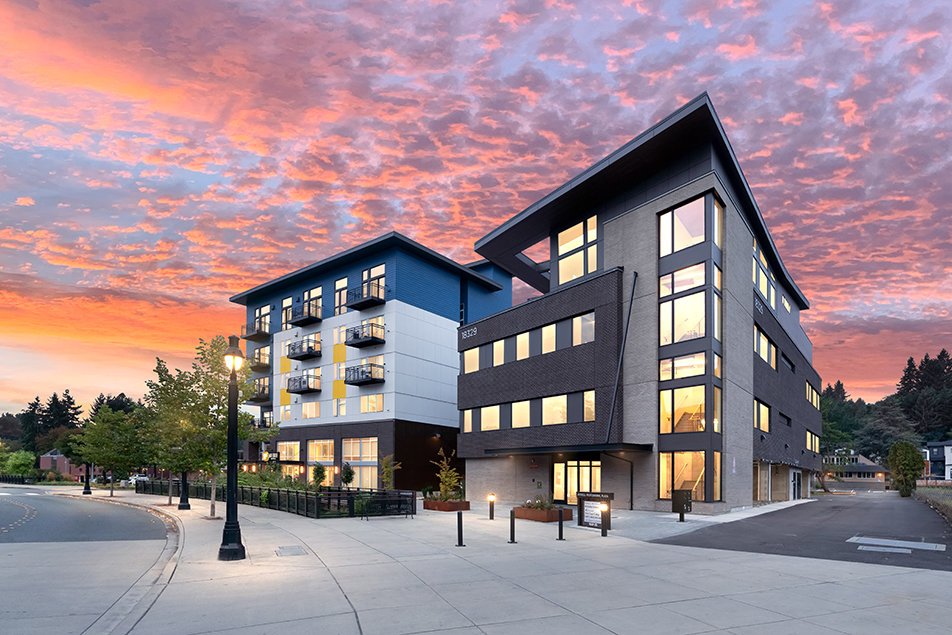
Street-facing view at dusk, showing the adjacent mixed-use building and pedestrian walkway.
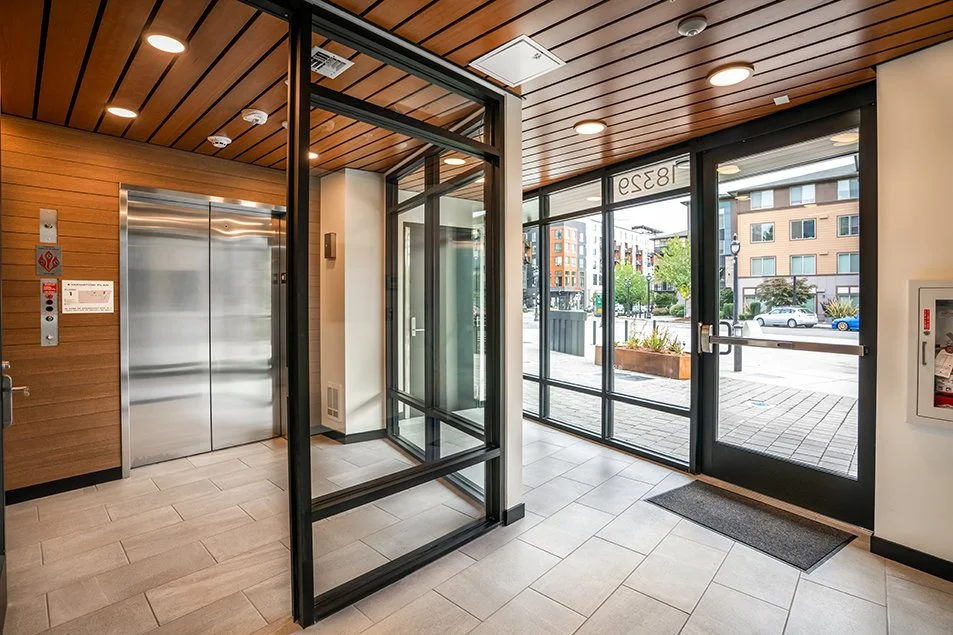
Main lobby showing the elevator, glass vestibule, and street-facing entry doors.
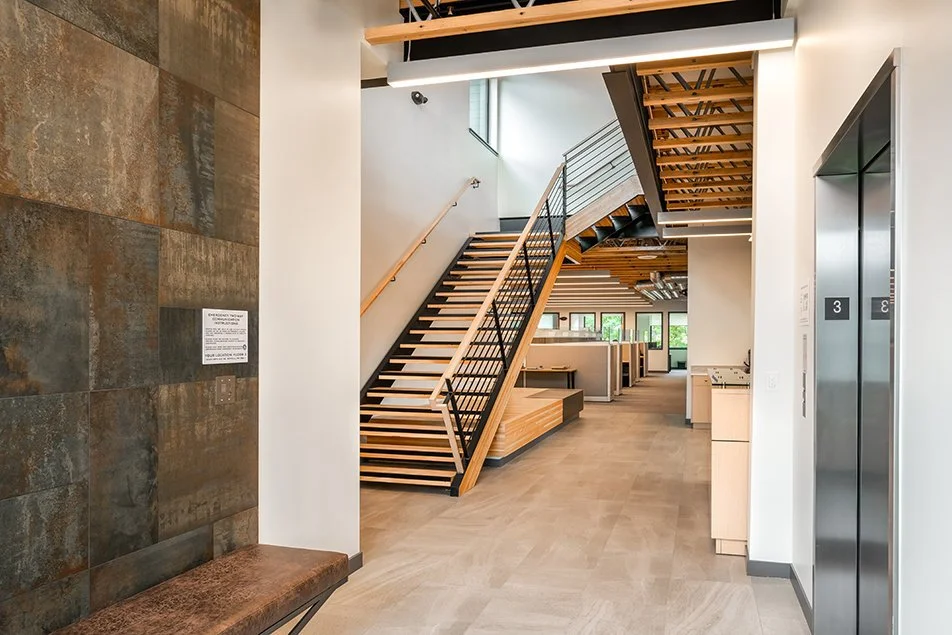
Interior view of the stairwell, showing wood treads, steel railings, and the upper landing with large windows.

Interior stairwell showing wood steps, steel railings, and the upper landing with large windows.
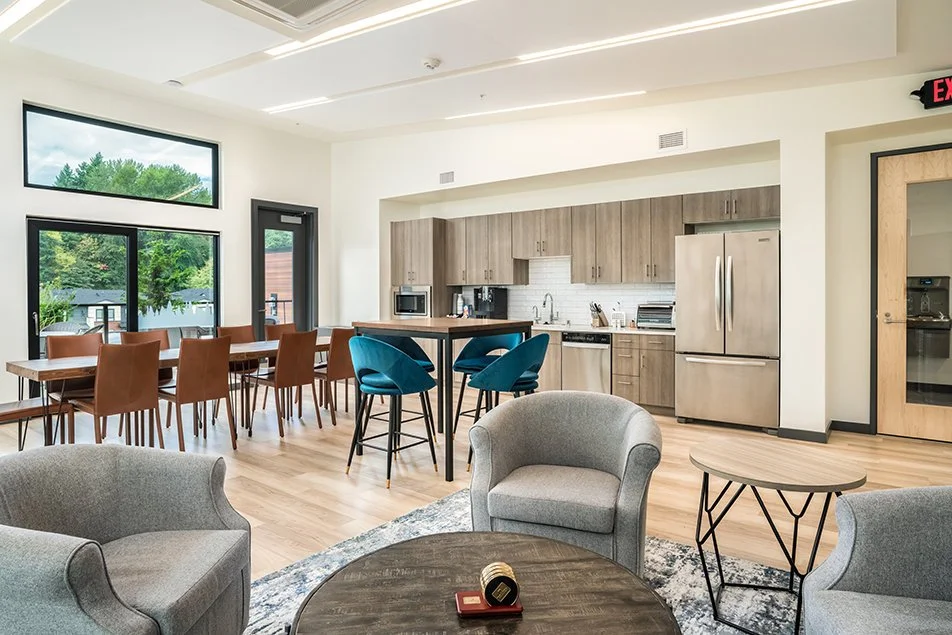
Shared lounge and kitchen area showing seating, dining tables, and the full breakroom kitchen.
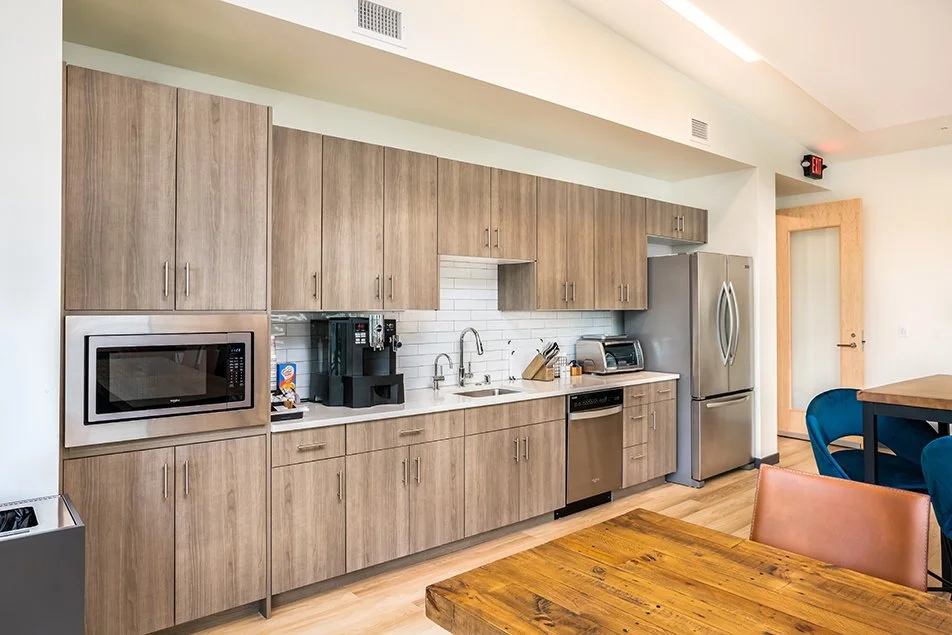
Breakroom kitchen featuring wood cabinets, stainless appliances, and a shared seating area.
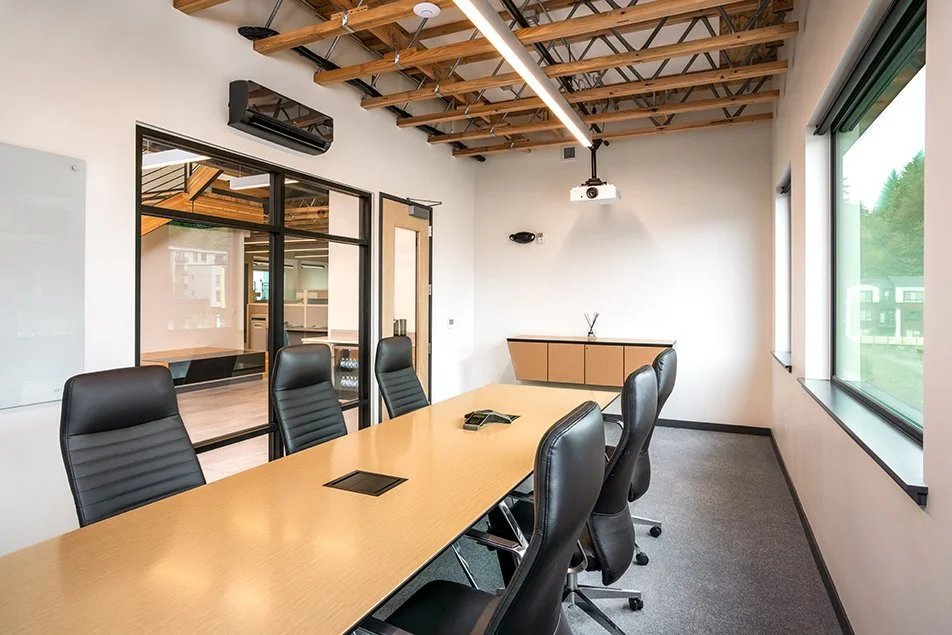
Conference room inside the 98th Avenue Office Building, showing a long meeting table, chairs, exposed ceiling structure, and projector.
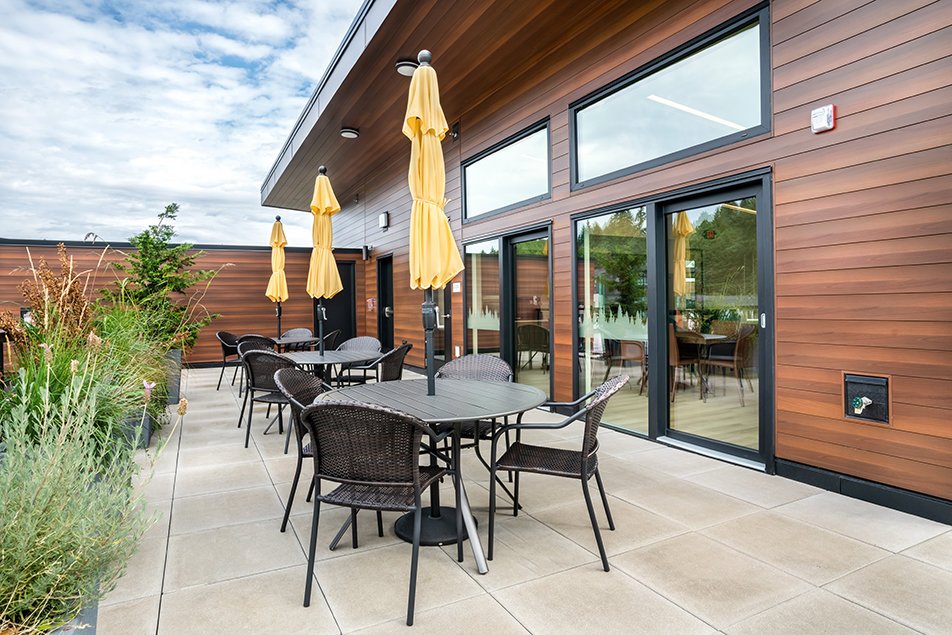
Rooftop terrace with seating, planters, and sliding doors leading to the interior.
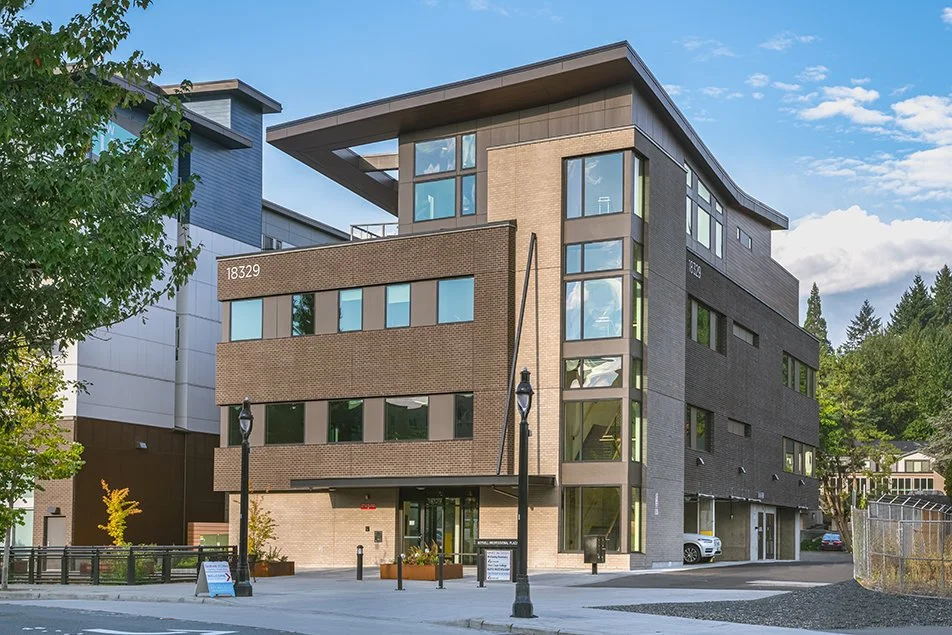
Exterior view showing the brick façade, upper-level overhang, and street-facing entrance.
PROJECT STORY
The 98th Avenue Office Building is the new headquarters for a private real estate development company in Bothell, Washington. The building organizes surface parking at grade with two levels of offices above, creating a compact footprint that supports flexibility and efficient tenant layout. Interior spaces emphasize daylight access through large glazing, complemented by exposed structural elements that give the circulation and work areas a straightforward, utilitarian character.
A steel-and-glulam staircase anchors the primary entry sequence and connects occupants to the rooftop deck, employee lounge, and executive amenities. High-performance triple-pane glazing and insulation levels exceeding code contribute to reduced energy use, improved comfort, and long-term operational value. Completed in Spring 2021, the project reflects a balance of design clarity, durable material choices, and a pragmatic approach to construction and building performance.